
Growing Demand for Botanical and Herbal Extracts in Europe
July 30, 2026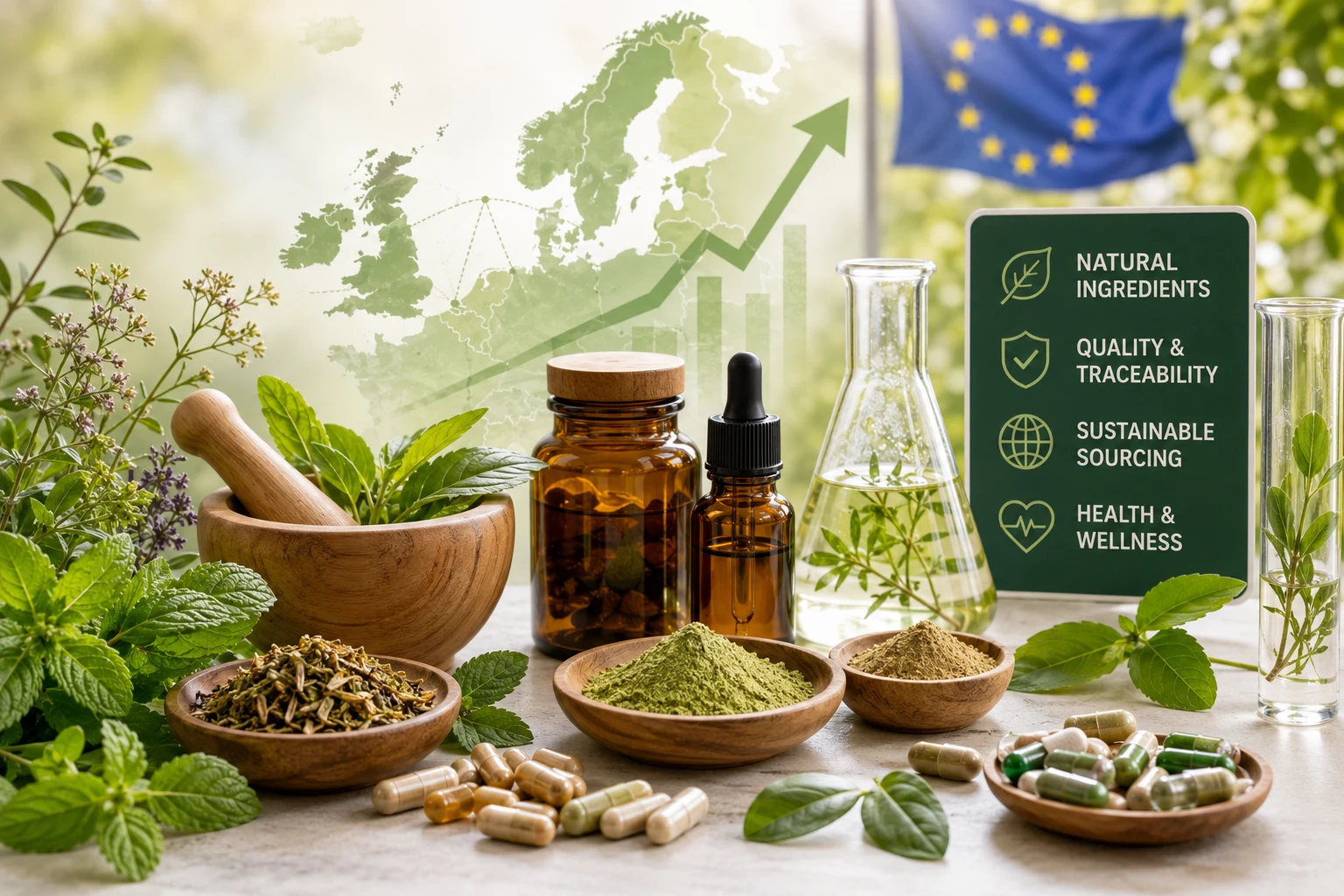
Europe is becoming an increasingly important market for botanical and herbal extracts, driven by growing interest in natural ingredients, preventive health, wellness products, and plant-based formulations. From food supplements and functional foods to cosmetics and herbal products, European manufacturers are looking for reliable sources of high-quality botanical ingredients with consistent specifications and traceability.
For suppliers and manufacturers in countries such as India, this creates significant opportunities—but success in the European market requires more than simply offering a natural ingredient. Buyers increasingly expect quality, documentation, consistency, regulatory awareness, and dependable supply.
Why Is Demand for Botanical Extracts Growing?
European consumers are showing strong interest in products associated with natural health and wellness. Botanical ingredients such as turmeric, ginger, ginseng, garlic, and other plant-based extracts are widely used in food supplements and health-related products. According to CBI, Europe accounted for approximately €1.2 billion in global botanical extract imports in 2024, representing around 34% of global import value.
The demand is also supported by Europe’s established food, supplement, pharmaceutical, and cosmetics industries. Manufacturers are increasingly incorporating plant-derived ingredients into new formulations and delivery formats, including capsules, powders, functional foods, beverages, gummies, and other convenient products.
This creates opportunities for suppliers that can provide standardized botanical extracts rather than only raw herbs or agricultural materials.
Europe Is Looking for More Than Raw Botanical Materials
One important development is the increasing demand for processed and value-added botanical ingredients.
Instead of purchasing only dried leaves, roots, seeds, or powders, European buyers may require extracts with defined specifications, extraction ratios, active-compound profiles, and consistent quality from batch to batch.
This shift creates opportunities for manufacturers with modern extraction, processing, testing, and quality-control capabilities.
India is particularly well positioned in this area because of its extensive biodiversity, long history of traditional botanical use, agricultural resources, and growing processing capabilities. Indian manufacturers can potentially supply a wide range of botanical ingredients to international customers when they can meet the required technical, quality, and regulatory standards.
Key European Markets for Botanical Ingredients
Germany, France, Italy, Spain, and the Netherlands are among the leading European importers of botanical extracts, according to CBI data based on 2024 trade figures. Together, these five markets represented around 64% of European extract imports in 2024.
Germany is particularly important because of its established natural health, herbal, food supplement, and pharmaceutical industries. The Netherlands also plays an important role as a European trading and distribution hub, allowing imported ingredients to reach other European markets.
For manufacturers targeting Europe, this means that identifying the right buyer and distribution channel can be just as important as identifying the right product opportunity.
What European Buyers Expect From Suppliers
Price remains important, but European buyers are increasingly focused on quality, reliability, traceability, and documentation.
Depending on the application, buyers may evaluate:
- Botanical species and plant part used
- Extraction method
- Extract ratio
- Active or marker compounds
- Standardization
- Microbiological specifications
- Heavy-metal limits
- Pesticide residues
- Contaminant testing
- Stability and shelf life
- Batch-to-batch consistency
- Technical documentation
- Certificates of analysis
- Traceability of raw materials
- Packaging and storage conditions
For manufacturers, having these details readily available can make the sourcing and qualification process considerably easier.
Regulatory and Safety Considerations
Entering the European market also requires an understanding of food and supplement regulations.
Botanicals and botanical preparations are widely available in Europe, but safety and regulatory requirements can vary depending on the ingredient, application, and individual European market. EFSA notes that the EU does not have one centralised authorisation procedure covering all botanicals used in food; Member States retain important responsibilities, while EU-wide food-law requirements also apply.
EFSA also maintains a Compendium of Botanicals containing plant species reported to contain naturally occurring substances of potential concern. The database is intended to support safety assessment and hazard identification rather than automatically classify a botanical as safe or unsafe.
For manufacturers targeting Europe, this makes regulatory knowledge and technical documentation an important part of international sourcing.
The Importance of Traceability and Consistent Quality
Natural ingredients can vary depending on geography, climate, cultivation practices, harvesting conditions, plant varieties, and processing methods.
European buyers therefore often need confidence that the same ingredient will meet agreed specifications across multiple shipments.
A manufacturer that can demonstrate controlled sourcing, documented production processes, laboratory testing, and consistent batch quality can have a significant advantage over suppliers that compete primarily on price.
This is especially important for ingredients used in food supplements, functional foods, cosmetics, and other products where quality and safety directly affect the finished product.
Opportunities for Indian Botanical Extract Manufacturers
India has a strong foundation for serving the growing international demand for botanical ingredients. Its diverse plant resources, established herbal-product industry, extraction capabilities, and experience with international ingredient markets provide a strong platform for export-oriented manufacturers.
However, being capable of producing an ingredient is only one part of the opportunity.
Manufacturers also need to reach the right international buyers—such as supplement companies, ingredient distributors, food manufacturers, nutraceutical companies, cosmetic companies, and specialist importers.
This is where reliable business intelligence and buyer identification can become valuable.
Rather than approaching large numbers of generic leads, manufacturers can focus on companies whose product portfolios, sourcing requirements, markets, and purchasing activity are relevant to their capabilities.
The Opportunity Ahead
The European market for botanical and herbal extracts offers significant opportunities for qualified suppliers, particularly those able to combine natural sourcing with modern processing, quality control, documentation, and dependable international supply.
At the same time, European buyers are looking for manufacturers that can provide more than a product catalogue. They want reliable partners who understand specifications, quality requirements, regulatory considerations, documentation, and commercial expectations.
For Indian manufacturers, this represents an opportunity to move beyond commodity exports and build stronger B2B relationships around value-added botanical ingredients.
For European and international buyers, identifying the right Indian manufacturer can provide access to a broad range of botanical capabilities and competitive sourcing opportunities.
The future of botanical sourcing in Europe is therefore likely to be driven not simply by the availability of natural ingredients, but by quality, traceability, technical capability, regulatory readiness, and meaningful connections between buyers and manufacturers.
<< Back